
Riparian Buffers: Protecting Hilton Head’s Waterways Naturally
By: Chase Coard
In coastal communities like Hilton Head Island, water is everywhere — lagoons, marshes, tidal creeks, ponds, golf course waterways, and estuaries all play an essential role in the island’s beauty and ecology. But with increasing development, stormwater runoff has become one of the biggest threats to water quality and shoreline stability.
One of the most effective and natural ways to protect these sensitive environments is through the use of *riparian buffers*.
What Is a Riparian Buffer?
A riparian buffer is a vegetated area located along the edge of a waterbody such as a pond, lagoon, creek, marsh, or drainage channel. These planted buffer zones are typically made up of native grasses, shrubs, trees, and groundcovers that help stabilize soil and naturally filter stormwater before it reaches nearby waterways.
Rather than allowing runoff to flow directly into lagoons or marsh systems, riparian buffers slow water down and allow the landscape to absorb and treat it naturally.
In coastal environments like Hilton Head, riparian buffers serve as a critical line of defense between developed areas and fragile aquatic ecosystems.
Why Riparian Buffers Matter in Hilton Head
Hilton Head’s extensive network of lagoons and tidal waterways are highly sensitive to:
- erosion
- nutrient pollution
- sediment runoff
- flooding
- shoreline degradation
Traditional turfgrass that extends directly to the water’s edge often provides very little environmental protection. During heavy rain events, fertilizers, sediment, oils, and pollutants can quickly wash into nearby waterways.
Riparian buffers help solve these problems naturally.
Benefits of Riparian Buffers
Improved Water Quality
Native vegetation acts like a natural filtration system, trapping sediment and absorbing nutrients before they enter ponds, marshes, and creeks. This can help reduce algae growth and improve overall water clarity.
Erosion Control & Shoreline Stabilization
The deep root systems of native plants help hold soil in place and reduce shoreline erosion caused by stormwater runoff and fluctuating water levels.
Flood & Stormwater Management
Riparian buffers slow down runoff and increase infiltration, helping reduce localized flooding and easing pressure on stormwater systems during major rain events.
Wildlife Habitat
These planted zones create habitat for birds, pollinators, fish, turtles, and other native wildlife that depend on healthy coastal ecosystems.
Enhanced Coastal Beauty
Well-designed native buffer plantings create a more natural, visually appealing shoreline while reducing the need for intensive mowing and maintenance.
Climate & Resilience Benefits
As coastal communities face stronger storms and rising water levels, natural landscape solutions like riparian buffers play an increasingly important role in long-term resilience planning.
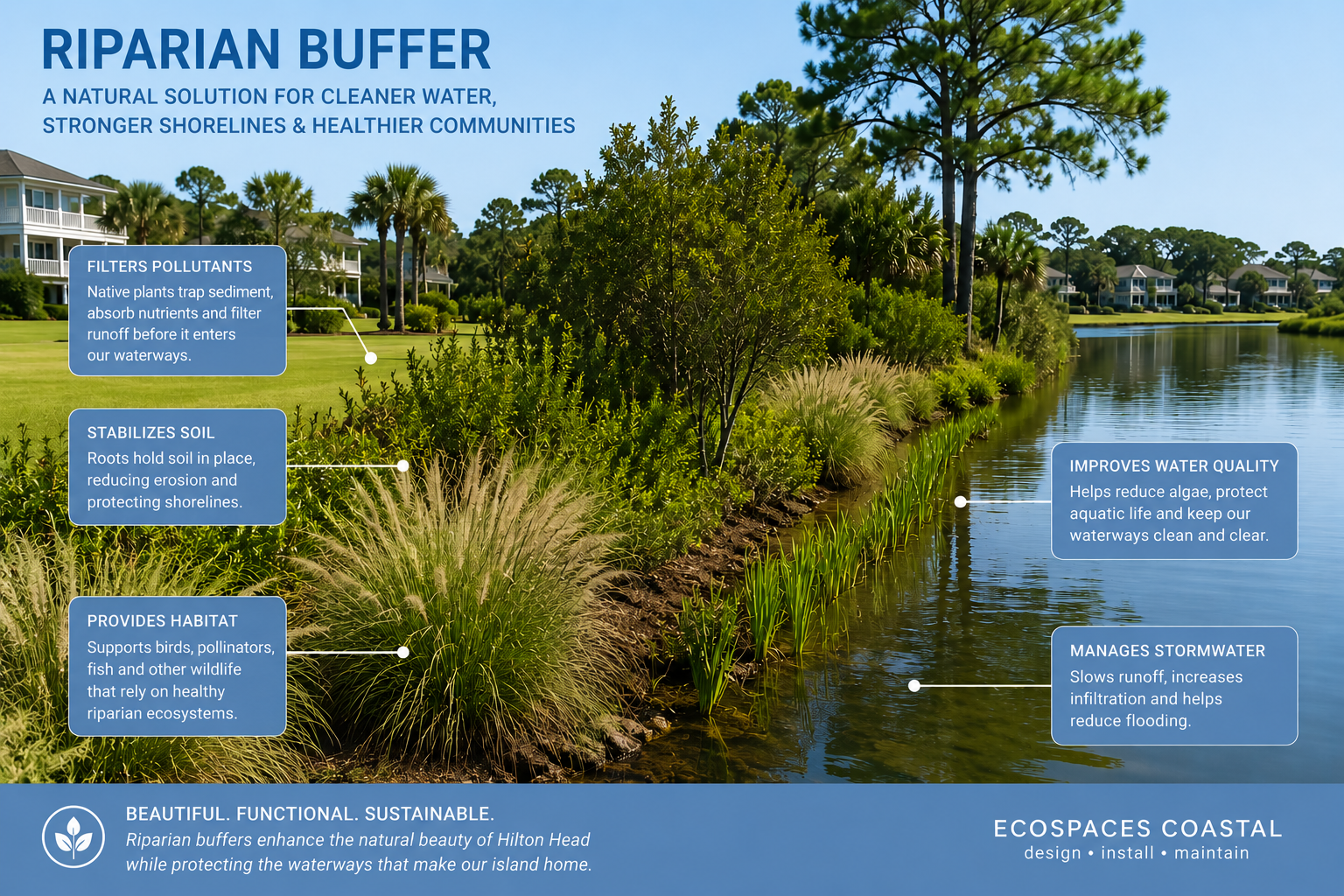
What Does a Riparian Buffer Look Like?
Riparian buffers can range from formal, manicured native plantings to more naturalized shoreline landscapes depending on the property and goals of the project.
Typical coastal buffer plantings may include:
- muhly grass
- switchgrass
- soft rush
- wax myrtle
- yaupon holly
- coastal panic grass
- native wetland perennials
- bald cypress and other water-tolerant trees
In many cases, these systems can be designed to complement upscale residential communities, golf courses, resorts, and commercial landscapes while still providing significant environmental benefits.
A Smarter Approach to Coastal Stormwater Management
As Hilton Head continues to grow, sustainable landscape practices are becoming increasingly important for protecting the waterways and natural beauty that make the island unique.
Riparian buffers are more than just landscaping — they are living infrastructure systems that improve water quality, strengthen shoreline resilience, support biodiversity, and help coastal communities adapt to changing environmental conditions.
At ecospaces Coastal, we believe the most effective stormwater solutions work with nature, not against it. Through thoughtful design, native plantings, and long-term stewardship, riparian buffers can help create healthier, more resilient coastal landscapes for generations to come.
One of the most effective and natural ways to protect these sensitive environments is through the use of *riparian buffers*.
What Is a Riparian Buffer?
A riparian buffer is a vegetated area located along the edge of a waterbody such as a pond, lagoon, creek, marsh, or drainage channel. These planted buffer zones are typically made up of native grasses, shrubs, trees, and groundcovers that help stabilize soil and naturally filter stormwater before it reaches nearby waterways.
Rather than allowing runoff to flow directly into lagoons or marsh systems, riparian buffers slow water down and allow the landscape to absorb and treat it naturally.
In coastal environments like Hilton Head, riparian buffers serve as a critical line of defense between developed areas and fragile aquatic ecosystems.
Why Riparian Buffers Matter in Hilton Head
Hilton Head’s extensive network of lagoons and tidal waterways are highly sensitive to:
- erosion
- nutrient pollution
- sediment runoff
- flooding
- shoreline degradation
Traditional turfgrass that extends directly to the water’s edge often provides very little environmental protection. During heavy rain events, fertilizers, sediment, oils, and pollutants can quickly wash into nearby waterways.
Riparian buffers help solve these problems naturally.
Benefits of Riparian Buffers
Improved Water Quality
Native vegetation acts like a natural filtration system, trapping sediment and absorbing nutrients before they enter ponds, marshes, and creeks. This can help reduce algae growth and improve overall water clarity.
Erosion Control & Shoreline Stabilization
The deep root systems of native plants help hold soil in place and reduce shoreline erosion caused by stormwater runoff and fluctuating water levels.
Flood & Stormwater Management
Riparian buffers slow down runoff and increase infiltration, helping reduce localized flooding and easing pressure on stormwater systems during major rain events.
Wildlife Habitat
These planted zones create habitat for birds, pollinators, fish, turtles, and other native wildlife that depend on healthy coastal ecosystems.
Enhanced Coastal Beauty
Well-designed native buffer plantings create a more natural, visually appealing shoreline while reducing the need for intensive mowing and maintenance.
Climate & Resilience Benefits
As coastal communities face stronger storms and rising water levels, natural landscape solutions like riparian buffers play an increasingly important role in long-term resilience planning.
What Does a Riparian Buffer Look Like?
Riparian buffers can range from formal, manicured native plantings to more naturalized shoreline landscapes depending on the property and goals of the project.
Typical coastal buffer plantings may include:
- muhly grass
- switchgrass
- soft rush
- wax myrtle
- yaupon holly
- coastal panic grass
- native wetland perennials
- bald cypress and other water-tolerant trees
In many cases, these systems can be designed to complement upscale residential communities, golf courses, resorts, and commercial landscapes while still providing significant environmental benefits.
A Smarter Approach to Coastal Stormwater Management
As Hilton Head continues to grow, sustainable landscape practices are becoming increasingly important for protecting the waterways and natural beauty that make the island unique.
Riparian buffers are more than just landscaping — they are living infrastructure systems that improve water quality, strengthen shoreline resilience, support biodiversity, and help coastal communities adapt to changing environmental conditions.
At ecospaces Coastal, we believe the most effective stormwater solutions work with nature, not against it. Through thoughtful design, native plantings, and long-term stewardship, riparian buffers can help create healthier, more resilient coastal landscapes for generations to come.
If you are interested contact ecospaces at (843) 473-8141 for a free quote.